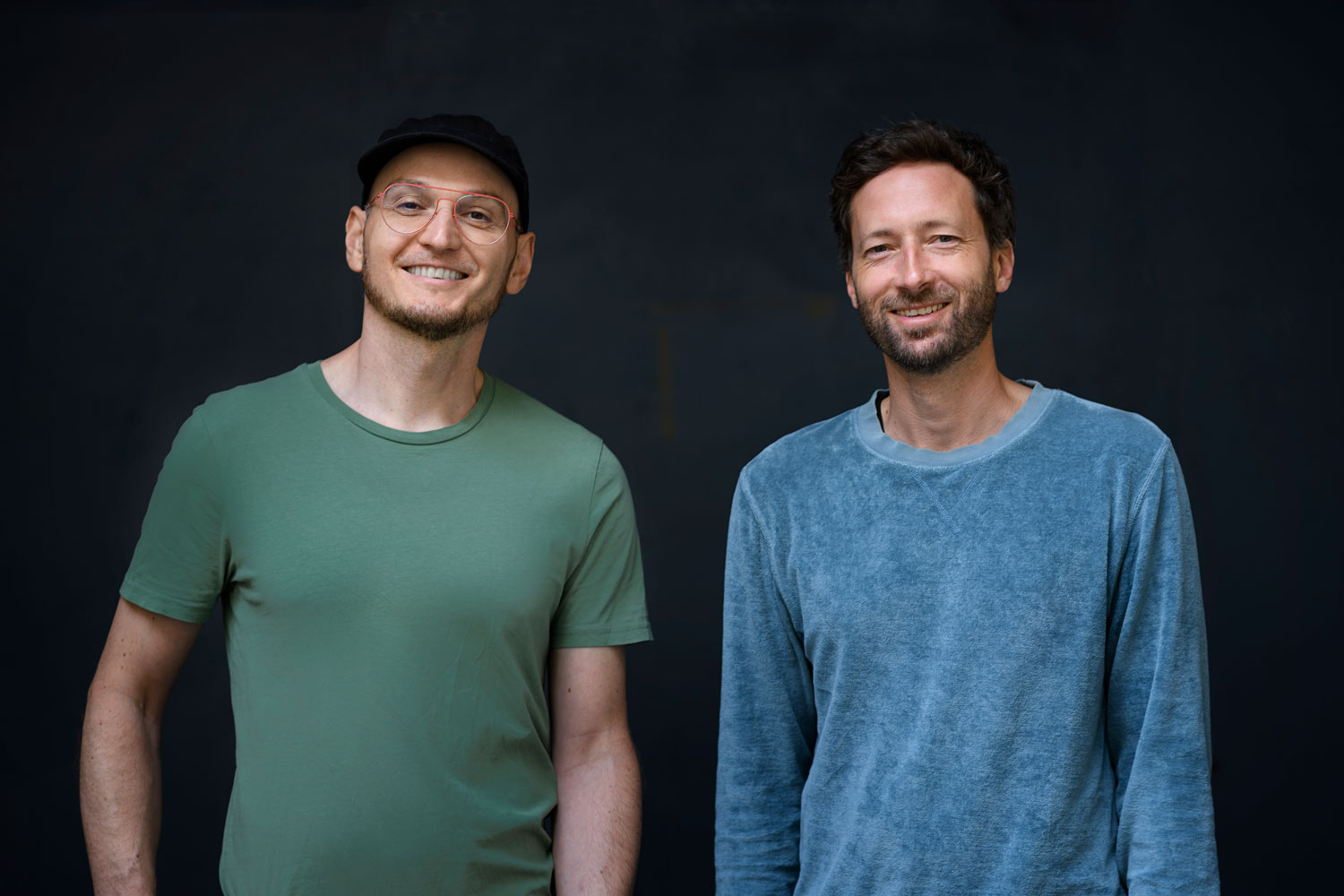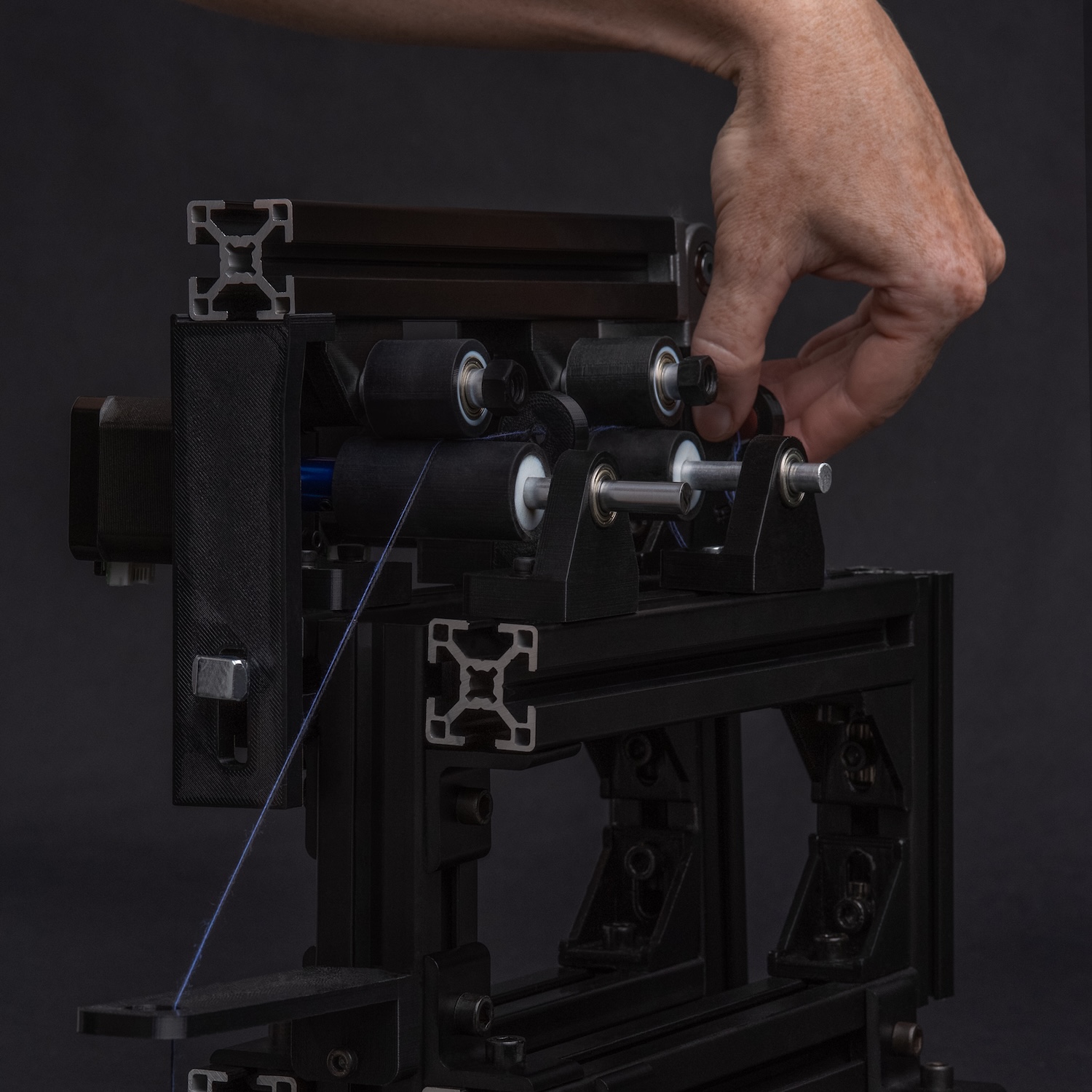
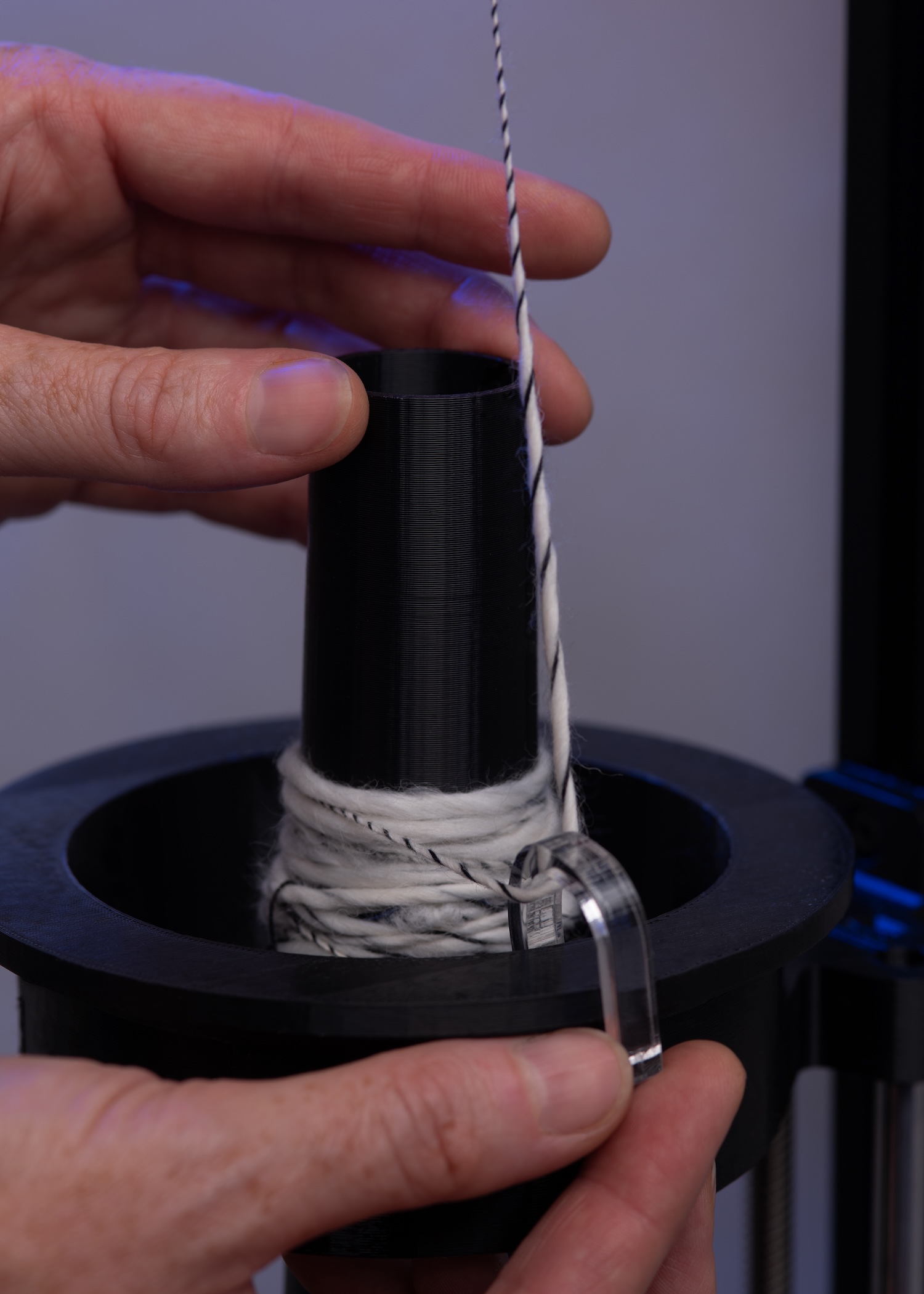
I’m not a business person, I’m not an engineer – it came from a passion for design. I wanted to begin my creative process directly with raw material, rather than with existing yarns. I created the first machine because I was a terrible hand spinner. I needed a machine that would work like a 3D printer but for fibers. I was looking for a small-scale tool that was flexible enough to be modified for my purposes. I couldn’t find one. With the help of the open-source communities around Arduino (a prototyping electronics platform for building interactive hardware), and Processing (a programming language that later inspired p5.js), as well as after some tears, I managed to build the first prototype of the spinning machine.
What materials did the first prototype spin?
I started with wool, then moved on to silk, linen, metal threads, and a wide range of other materials. Not all of them worked out the way I wanted.
You mentioned Arduino and Processing. Was coding part of design education when you started the project?
My first machine was made in 2012. I learned everything because I wanted to. Coding wasn’t part of the curriculum back then, especially in the field of textile design. I think nowadays it’s more common.
How did you manage to turn the prototype into a product?
At the beginning, it was more of a personal project – a way to create exactly the yarns I wanted. I didn’t imagine it would become a tool for other creative people, as it is today. The turning point came after graduation. I received funding that helped me turn the project into a company.
When you first introduced your idea, what were the reactions?
I’ll start with the industry – I spoke with almost every spinning mill in Germany and explained my project to them. Their reaction was something like: “Hmm, you’re a designer who created a machine that runs slower than ours…” They didn’t really understand it. Their attitude was closed-minded, with little to no willingness to share information or rethink processes or tools in a way that could support the development of this kind of technology. The reason was their industrial, large-scale perspective.
But the target group for your machines is different…
A business coach I once had told me, "You have to patent your design, your machines…" I didn’t really understand that way of thinking, so I thought: I hear what you’re saying, but I’m going to do exactly the opposite. After visiting design fairs, I realized that the real target group was designers like me and small-scale fiber producers. So I decided to shift the focus, start working with this group, and make everything open source.
What role do your machines play in the creative process?
HILO Textiles approach is about maintaining a balance between the hardware and the person. It’s not about the machine taking over everything. The person makes the decisions, can hack the process, and adjust the outcome very freely. It’s fascinating how you can transform a material into something entirely different just by using different parameters.
It can lead to very unexpected material discoveries, right?
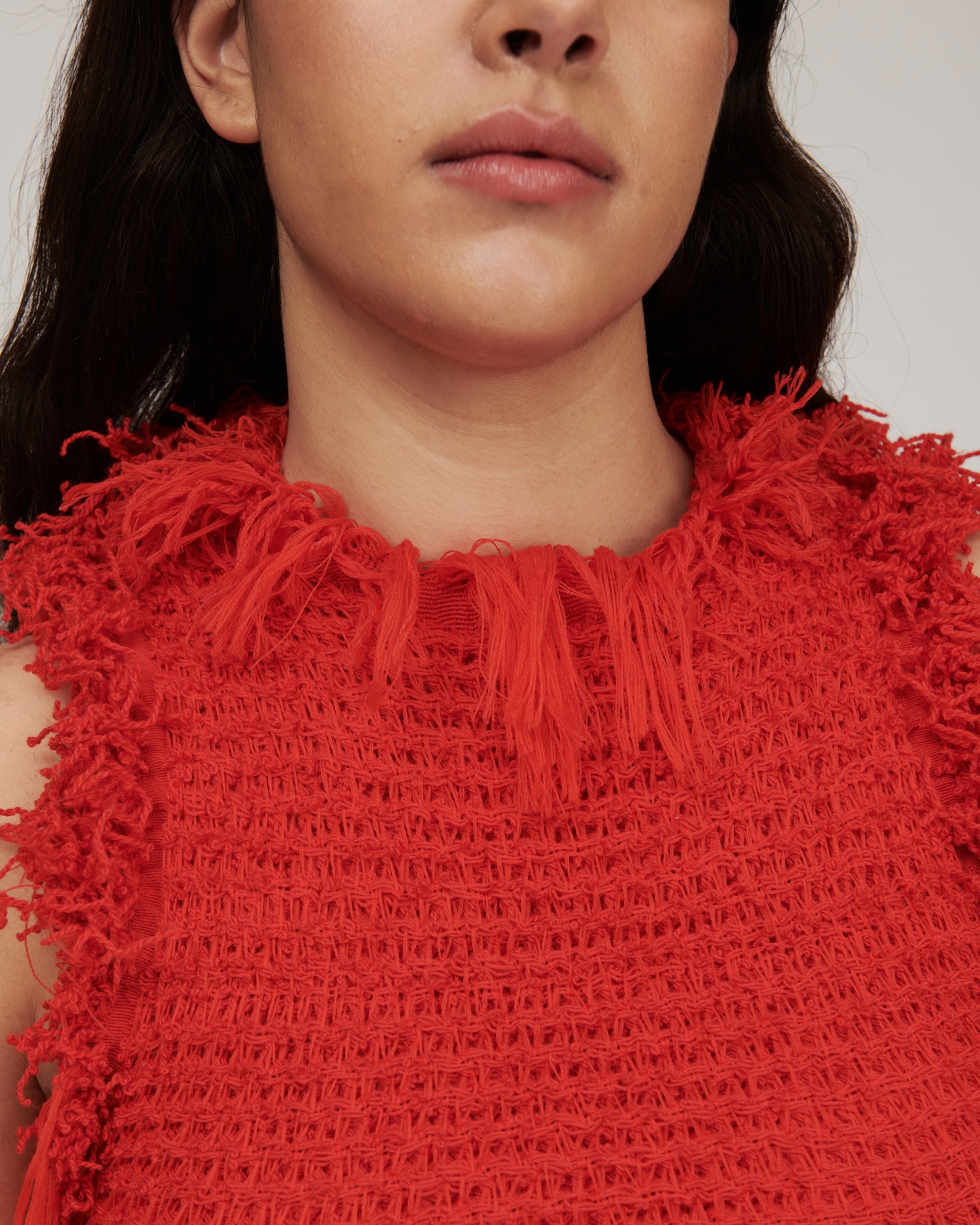
Absolutely. We had a great collaboration with the brand Stem. We developed an overtwisted yarn called Elastic Wool. It’s 100% wool, it does not rely on synthetic fibers. The industry would never imagine it as something that could work, because overtwisted yarn is a mistake, right? And we proved it can be a perfect feature for some designs, allowing garments to adapt to different body shapes without alterations or additional materials.
How do you understand the role of a designer?
For me, a designer is not just someone who makes a product. I see the role more as that of a catalyst, or an element that connects different fields. A designer creates bridges between science and users, but also opens up space for sustainability – for example, through design for disassembly, by considering the life cycle of a product, and by thinking about the broader impact of design in general.
Speaking of the impact of design, what does that mean specifically for HILO Textiles?
Going open source was a major decision in that sense. We decided to create technology that is accessible to anyone, rather than something elite. It may seem like a small thing, but it has an impact.
What options do people have if they want to use your machines?
We wanted to balance the accessibility with the sustainability of the business model. From my experience, there is no single successful way to do this. That’s why we offer different options. One is fully open source, with blueprints, code, and everything else available on GitHub and GitLab (open-source development platforms). This option is mainly for makers. But we also sell ready-made machines to institutions, such as schools, or to people like textile designers who do not want to assemble the machine themselves. There is also a third option – the kit, my favourite one. You don’t have to start completely from scratch, but by building the machine with the kit and tutorials, you learn how the machine works. Then, if something breaks, you know how to fix it!
How are your ready-made machines and kits produced?
We print our machine parts in-house in the studio. We have almost ten years of experience now and plan to scale up our production in 2027. Prusa Research is an inspiring example for us. I ordered one of their 3D printers and built it myself. It was a great experience, with very clear instructions. That’s where we are heading with the kits.
Another column of your work are workshops. What can your participants learn?
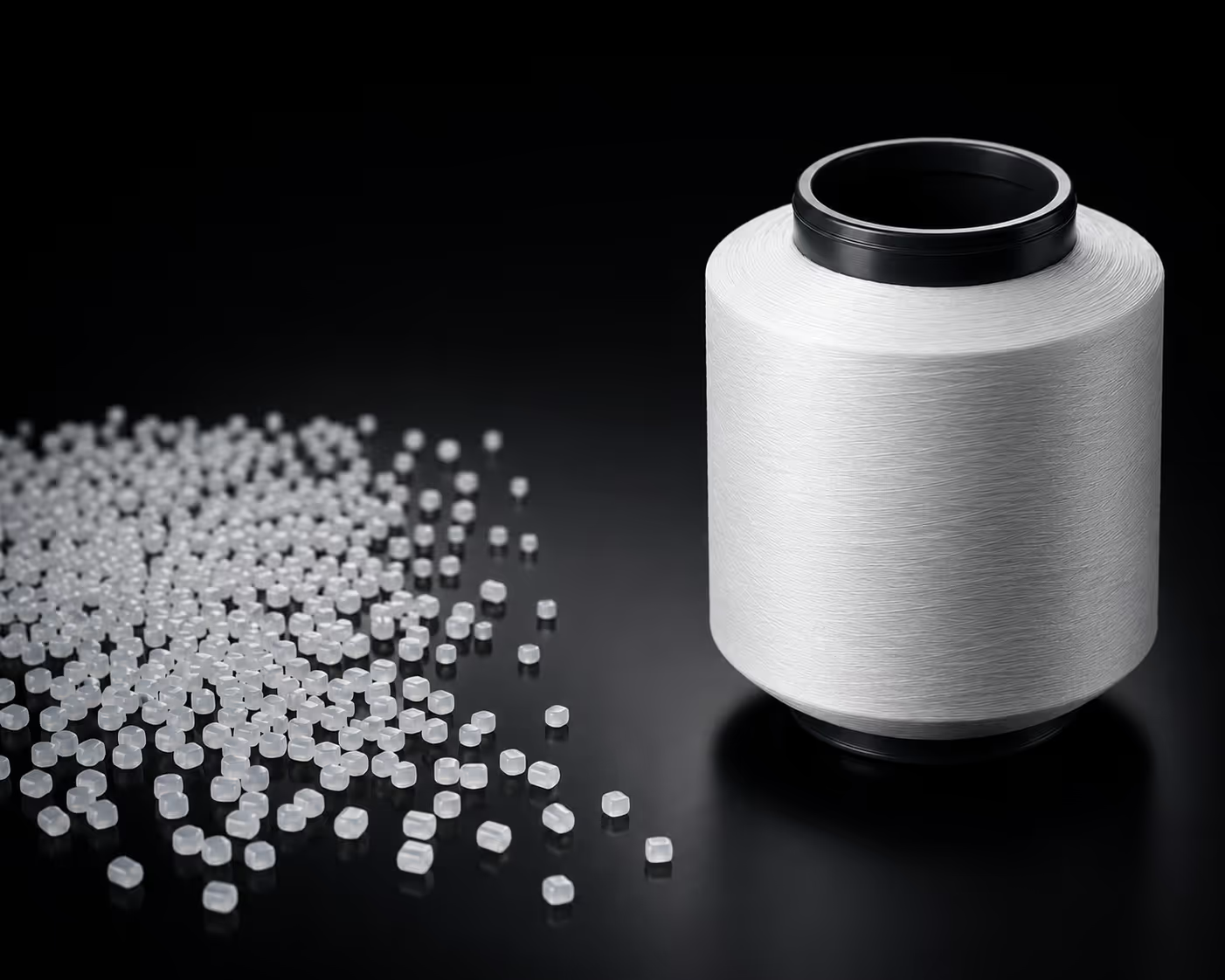
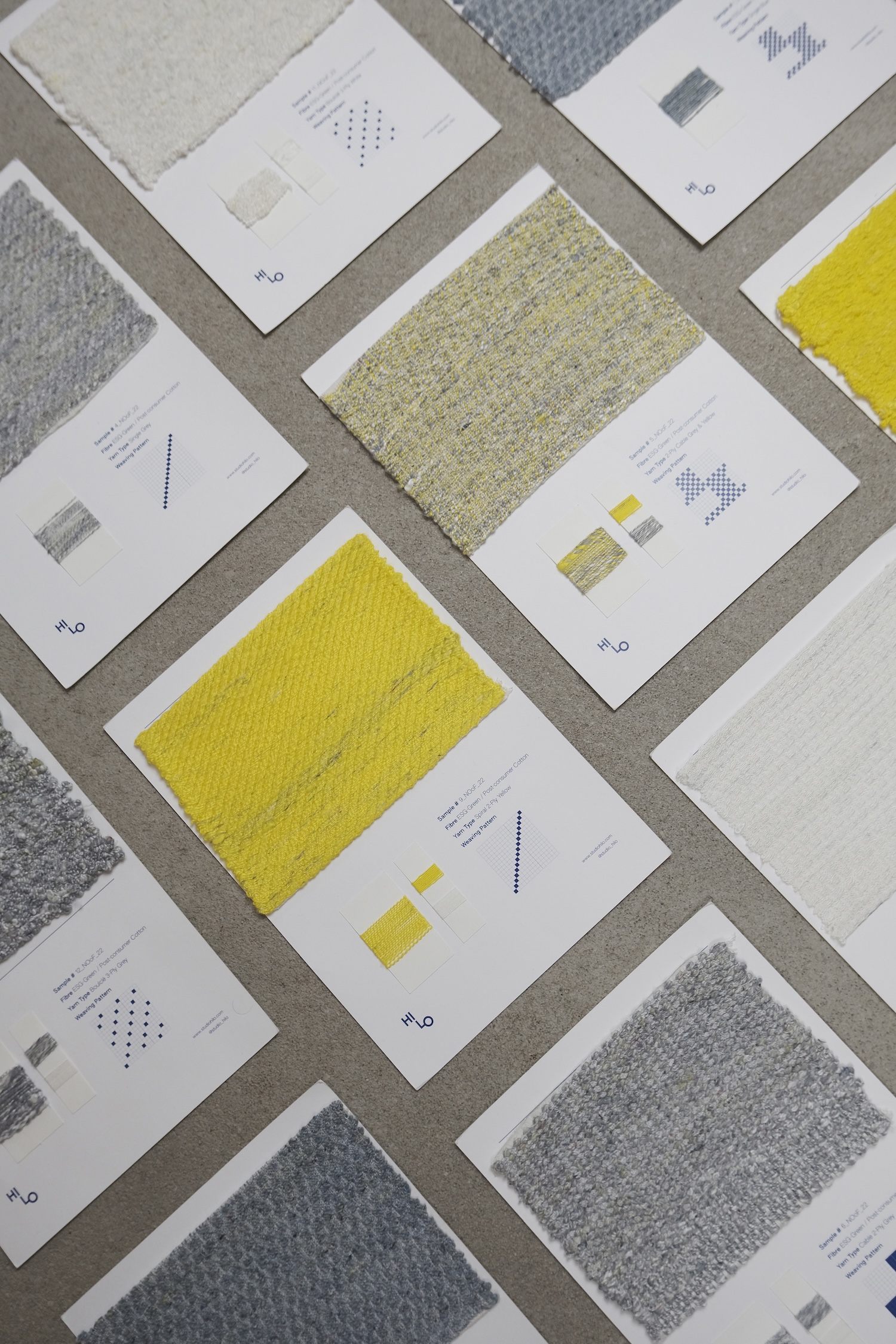
We teach people how to use the machine and work with different materials. Protein fibers, such as wool, behave in a completely different way than flax, for example. Regenerated fibers behave differently from polyester, and so on. We also offer yarn design workshops focused on how yarn is spun or plied, because that defines the way the fabric looks – not only its appearance, but also its function. I think there is a knowledge gap around this potential. This knowledge has been taken over by industry, and my vision is to bring it back as a tool for design competence.