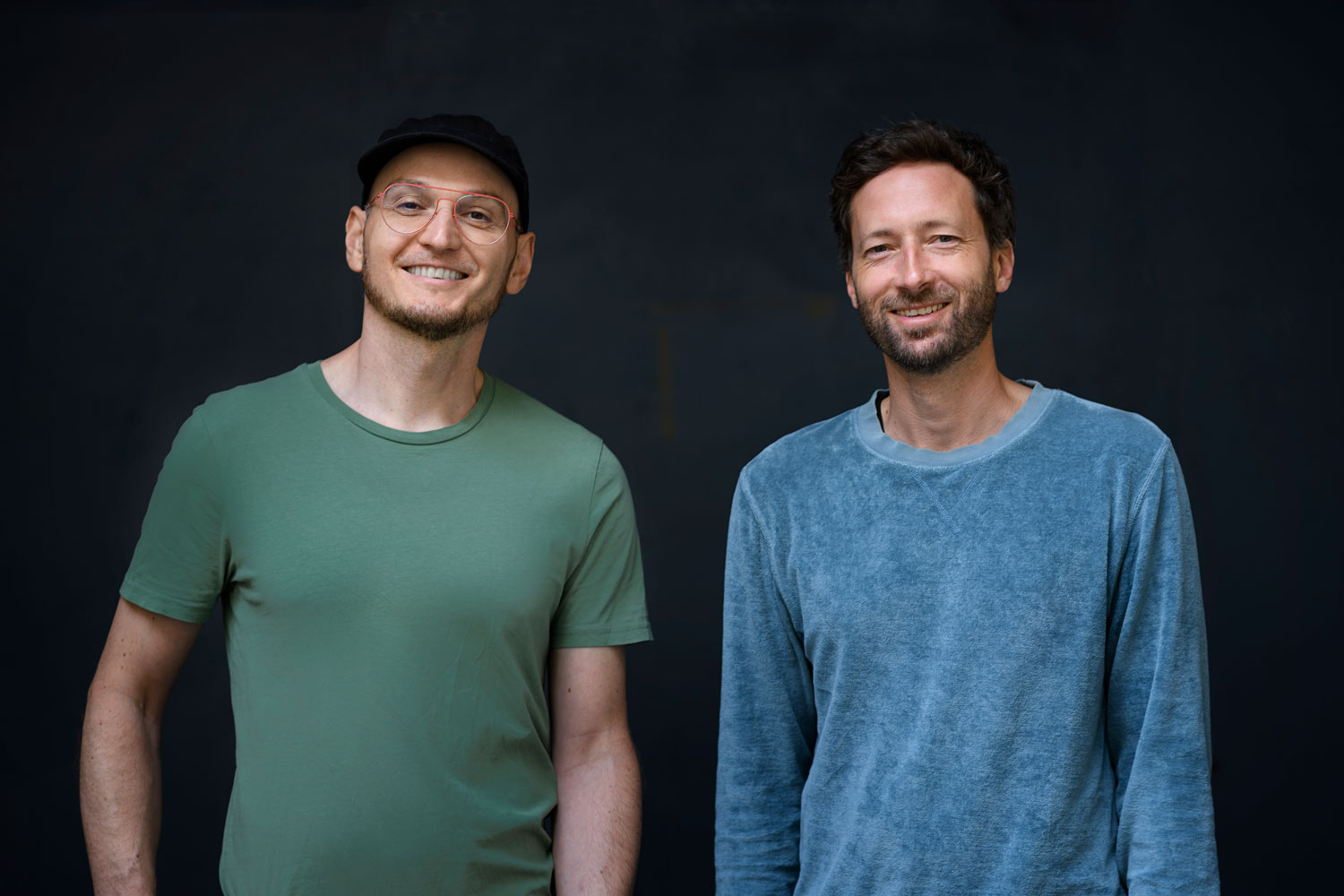

Behind the pulping + project stands a trio of industrial designers from Halle (Saale) — Ina Turinsky, Sophia Reißenweber and Andi Wagner, who together form the studio ponton works. Their work builds on shared experience at BurgLabs at the Burg Giebichenstein University of Art and Design in Halle, as well as collaboration with Professor Mareike Gast and other colleagues. Their earlier projects insectmatter and Flushed provided both the conceptual and technical foundation for pulping +.
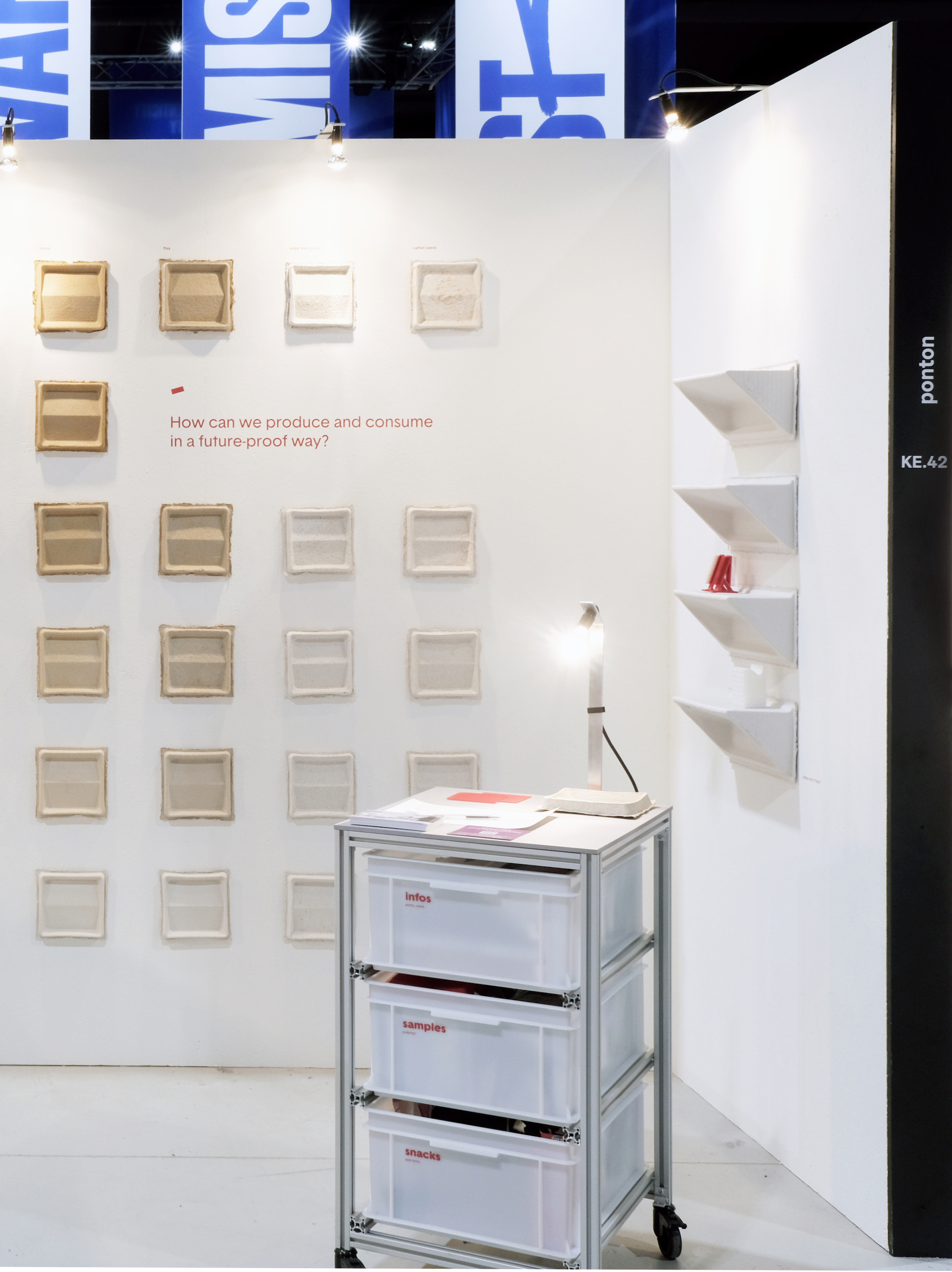
In pulping + the designers focus on reducing the proportion of wood fibers by replacing them with regional plant-based alternatives. Depending on the desired properties, the proportion of plant fibers in the final material ranges from 10 to 70 percent, with the remainder consisting of recycled cellulose. By adjusting this ratio, they can deliberately influence density, strength, and surface quality while preserving the material’s biogenic character. All fibers, coatings, and pigments come from renewable biological sources, allowing the entire material system to be recycled repeatedly during production. The material can be dissolved and reformed without loss of quality and is fully biodegradable outside the circular system.
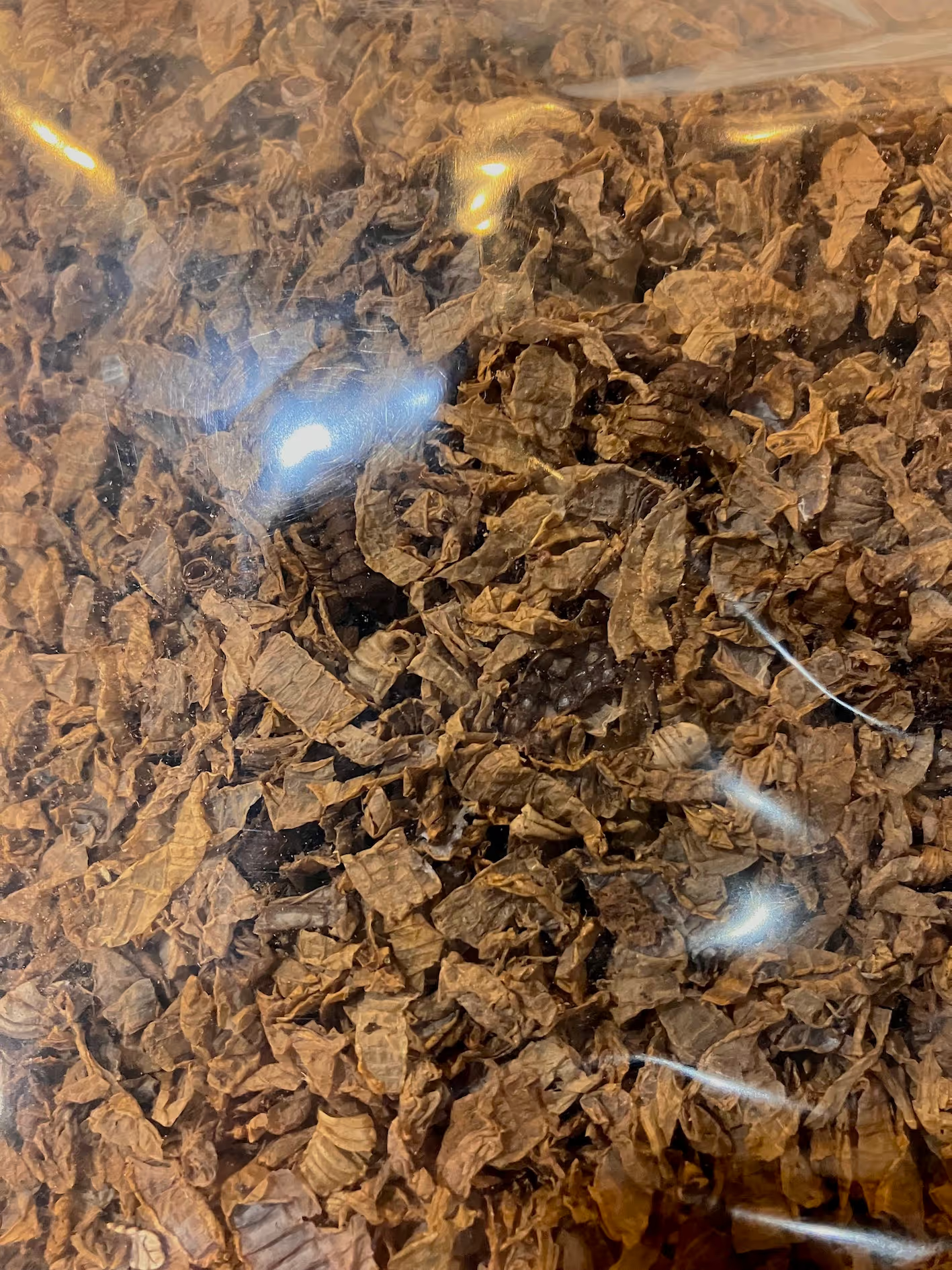
The designers work with a diverse array of regional fibers found around Halle (Saale) in Germany – from energy crops and fast-growing thermophilic species with C4 type photosynthesis, to wetland plants from rehydrated peatlands, to textile crops and residual biomass from urban parks. These include cattail, cup plant (Silphium), flax, miscanthus, meadow mixtures of grasses and herbs, hemp, seagrass (Zostera), and leftovers from beet cultivation.
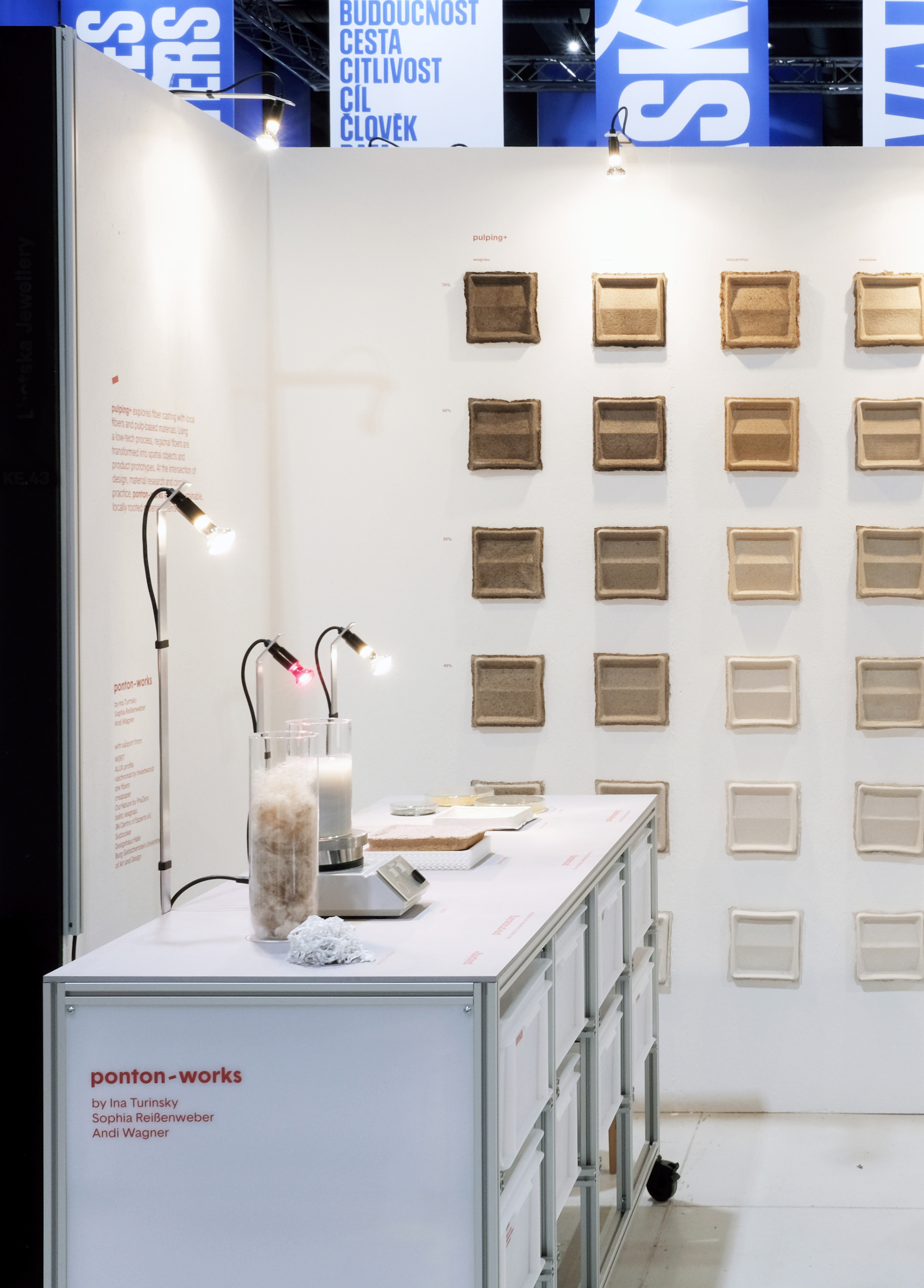
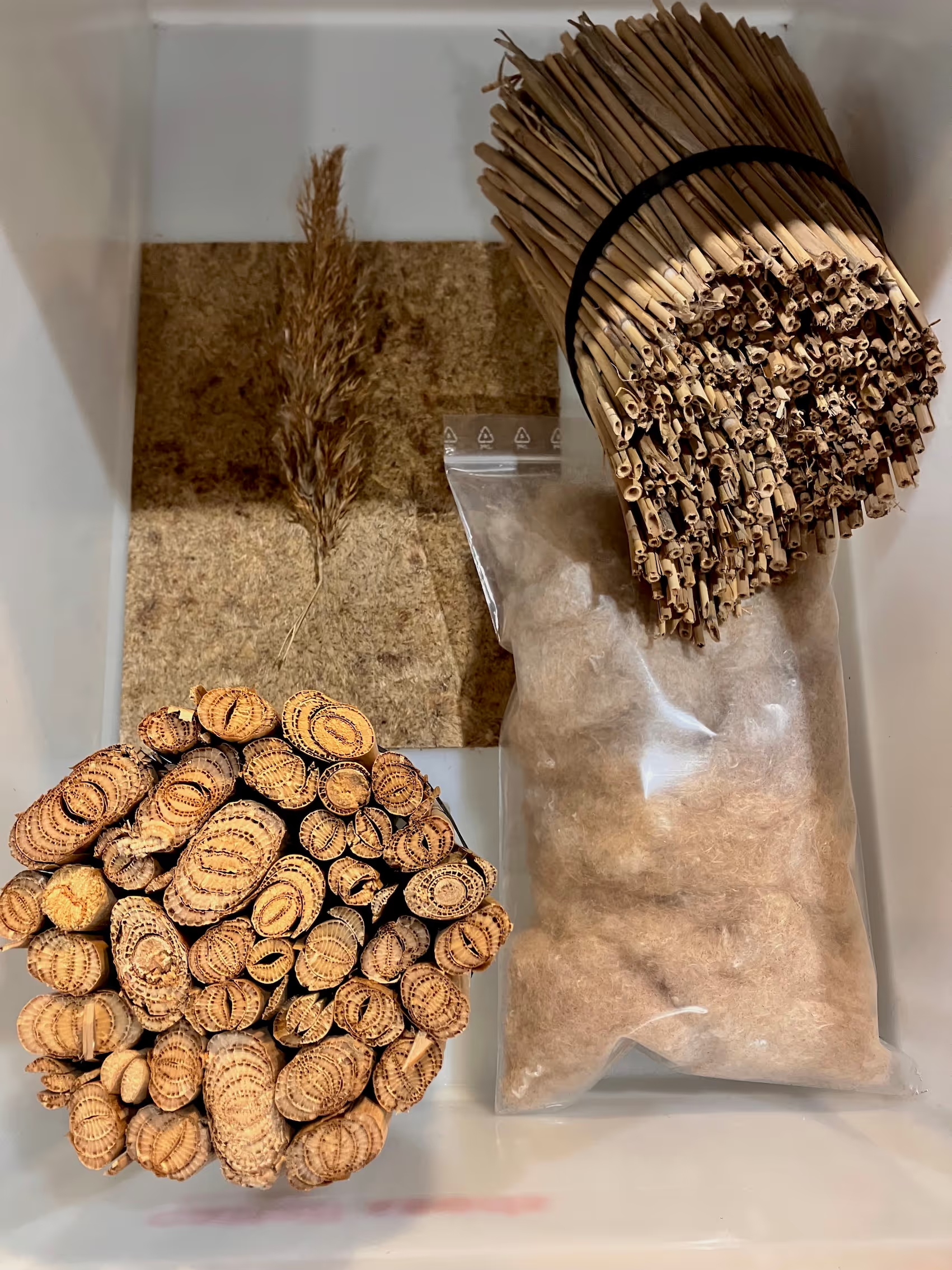
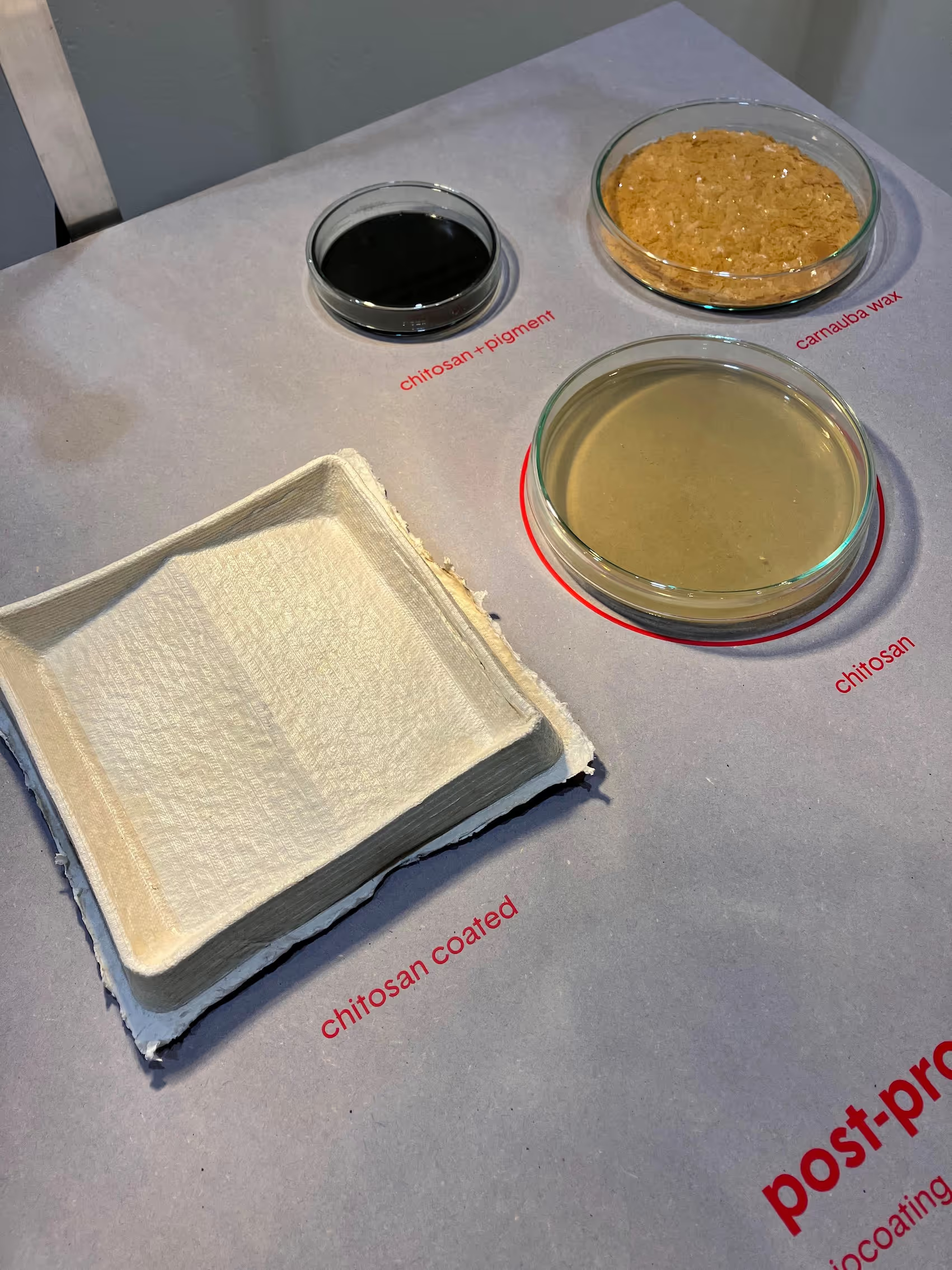
They fine-tune material properties through functional coatings applied in the final processing stage. Using biopolymers such as chitosan, casein, or carnauba wax, all of which can be redissolved and can also carry natural pigments. These coatings allow adjustments to color, gloss, and surface protection without disrupting compatibility with the circular material system. The chitosan could be produced from chitin extracted from the cuticles of black soldier fly larvae (Hermetia illucens), which are farmed in Europe as feed for insectivorous animals. They also worked with this source in their research project insectmatter. A key advantage is the ability to use local waste from insect farms as an input resource.
And what is the future vision for pulping +? Ina Turinsky from ponton works explains: “At the moment, all our samples and prototypes are produced in a laboratory setup. The next step will be to transfer our findings to an industrial technicum to test scalability, optimize process parameters, and validate circular performance under real production conditions.”
In the future, the material could have a wide range of applications – from product packaging to interior accessories or designer furniture. Most important, however, is the idea of sustainable design. According to Turinsky, materials and manufacturing techniques determine not only a product’s properties but also who becomes part of the process. By choosing specific input fibers from regional by-products, agriculture, industry, and design can be interconnected into a shared value network – a regional community of production and recycling.