You're one of the co-founders of Fantasy Fibre Mill. What is your focus within the project?
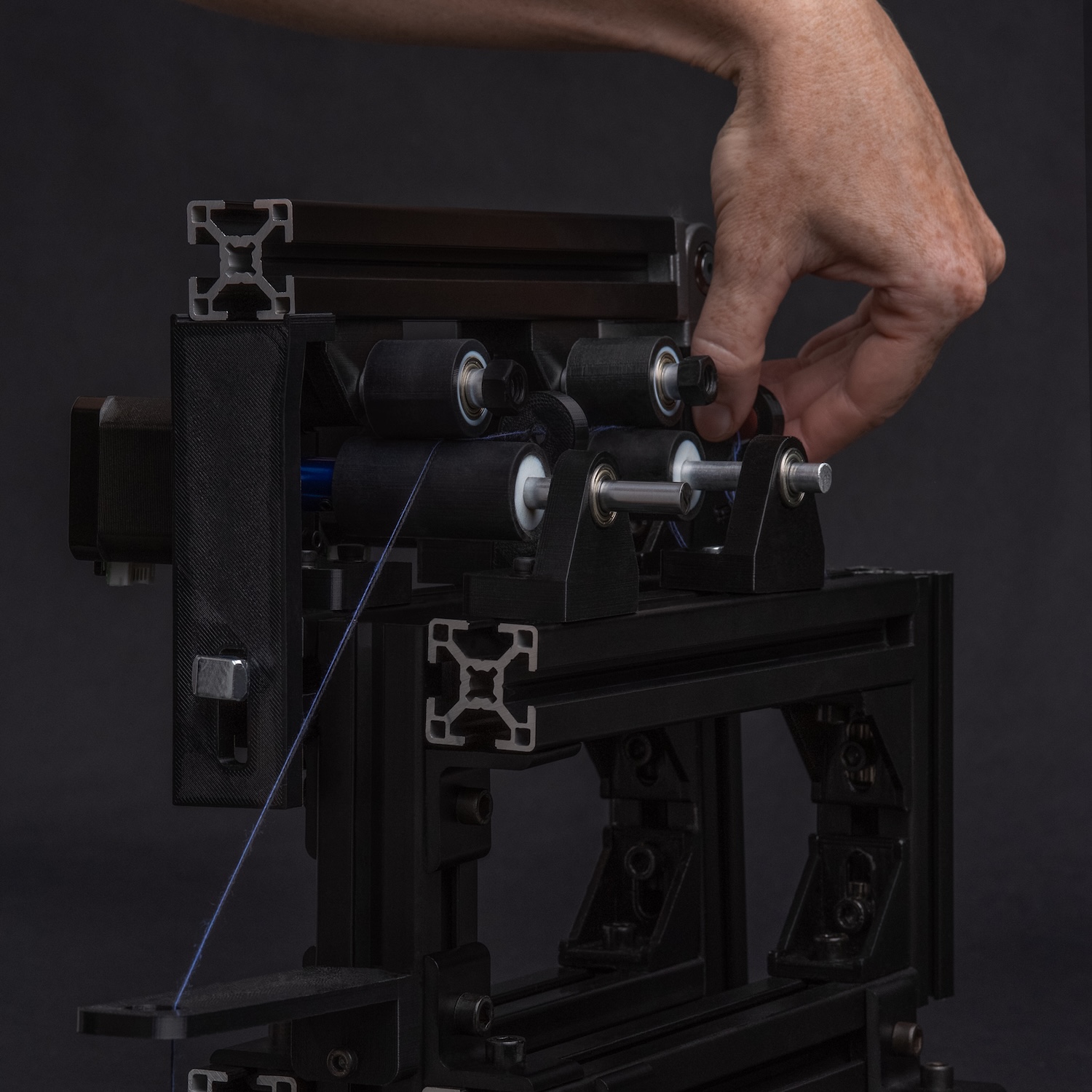
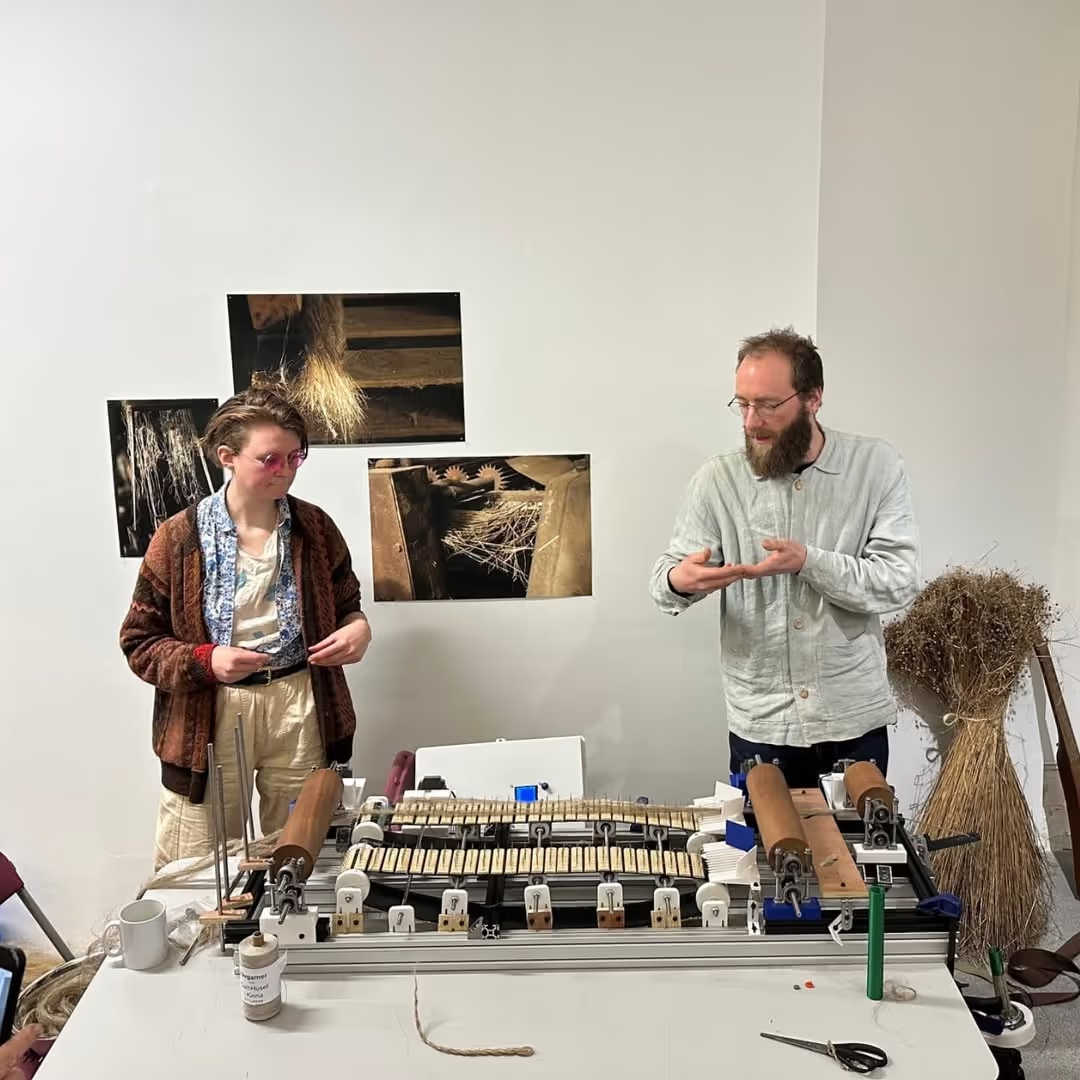
We develop open-source machinery for local small- to medium-scale flax-to-linen processing.
Is it missing?
At the moment in the UK, the only options for processing flax or hemp are hand tools. Or you can send the material overseas to France or China, which have big factories, but that is something for big volumes only…
What inspired you to resurrect local flax production?
I used to work as a costume and set designer for theater and circus. I was informed about workers’ rights and low-wage problems in the fashion industry, but I’d never thought about the step before that — like where the textile fibers come from. During lockdown in 2020, I volunteered at a fruit and vegetable farm and I read an article in The Land magazine that had a special issue on farming textiles and it recommended the book Fibershed by Rebecca Burgess. (Fibershed is a global movement of local communities developing regional fiber systems.) After reading this book, I bought seeds and started growing flax.
What did this hands-on experience bring?
Actually, the first year I planted the most flax I’ve ever grown — a whole hectare! I think this was the largest amount of flax fiber variety grown in the UK since the 1950s or so. From this very enthusiastic, a bit naive, starting point I realized the bottleneck is the lack of infrastructure and machines for processing.
I researched the costs of industrial equipment, but we were quoted around 6-8 million euros for a scutching set-up — that’s only the first part of the process. And you’d probably have to pay the same price or more to get spinning machinery. So that’s how we started to develop our machines.
For whom are your machines?
We are trying to make the machines so cheap and affordable that a small farmer would take the risk to try them. Farmers are interested in trying new crops, and the designers and small textile brands are interested in organic, ethical, locally grown fibers, but there is nothing in the middle. We try to bridge this gap.
How much will your machines cost?
To get from a straw to a yarn, the three machines would cost about 10,000 pounds. We use a lot of parts that are available in shops — no niche materials, 3D-printed parts…
Where do you find information or inspiration for machine building, and how long does it take to develop a machine that functions reliably and efficiently?
I used to be a member of a Makerspace in Newcastle, where I started to learn how to make things. Then Farm Hack which is a website with DIY inventions for agricultural purposes — tools, machines... I’ve read a lot of old books about flax processing, and interviewed farmers… There’s also a place in the UK called Flax Land, run by Simon and Ann Cooper. They have a flax museum and Simon has built a lot of hand-processing tools that are more mechanized. Some of our earlier machines were inspired by his concepts, but we added motors to them. Studio Hilo in Berlin was a really big inspiration for the spinning machine. Many different sources…
Which machine or part of the process has been the most technically challenging?
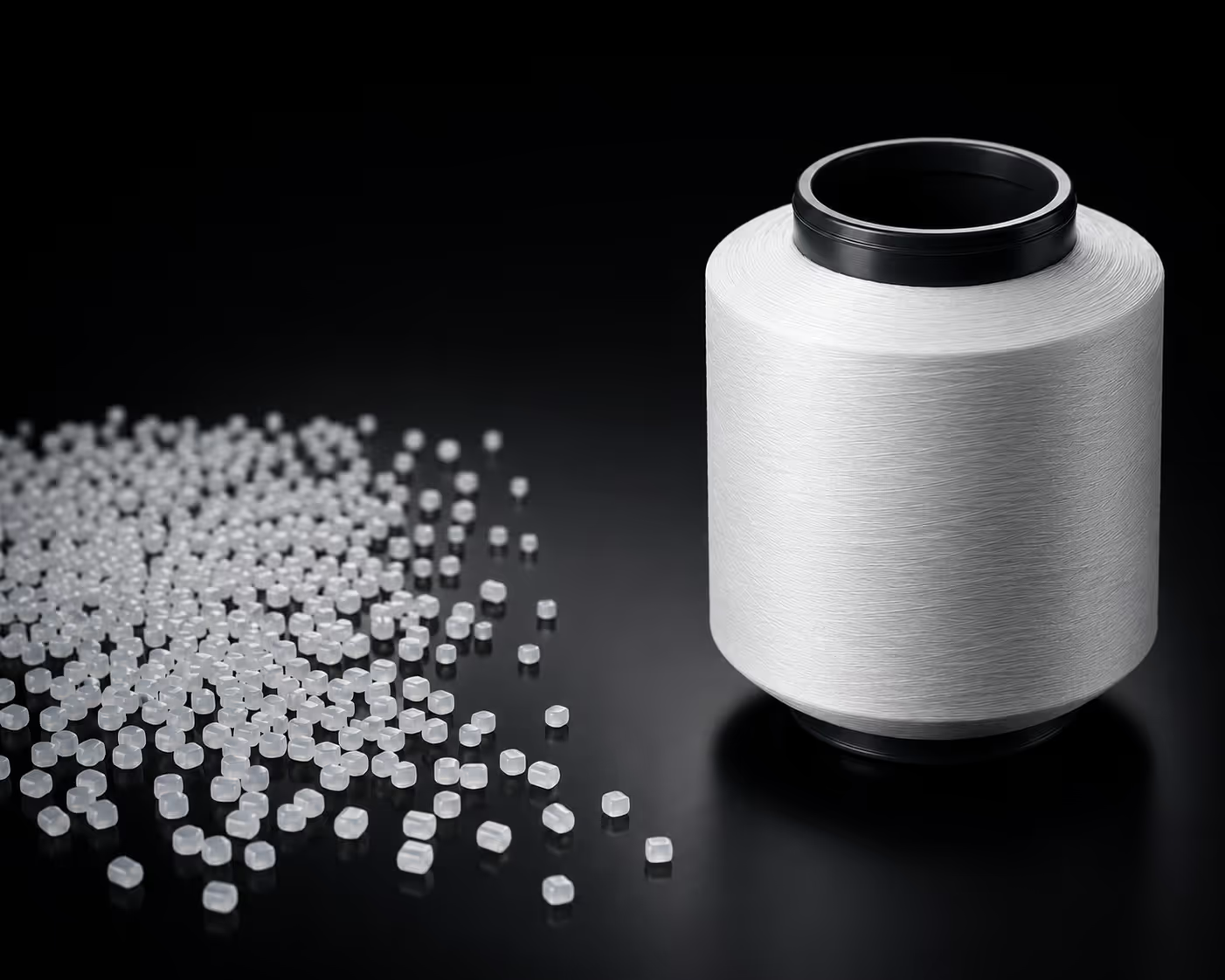
The stage just before spinning. It’s called drafting — or sometimes drafting and doubling. For machine spinning you first need to make a ribbon from fibers called sliver. This stage does not exist in the hand processing. A hand spinner constantly analyzes what is the perfect amount of fibers to feed in — it requires a lot of skill and instant adjustments, whereas the machine needs to get the fibers prepared in a perfect line: the sliver.
You’ve received an Innovate UK Transformative Technologies grant to build a mini flax-to-linen processing mill. How has this support influenced the project?
I went back to the university in Covid. I did an MSc in fashion and textile management. I applied to some competitions for students with entrepreneurial ideas. And they put me in contact with a business team that really helped me and Nick, my business partner, apply for this big government grant. We didn’t get it the first time, but the third. And Nick put a lot of effort into it. We spent the money mostly on getting our workshop space, where we have machines, on materials to build them… One of our best investments was probably a 3D printer. The grant also allowed us to go to ITMA in Milan, an International Textile Machinery Association exhibition, which happens once every four years. We spoke to everybody who was doing something with hemp or flax there. It was great to go and also really interesting, because we realized not a single person did flax spinning — nobody was selling the equipment. The only examples were using cottonization, which means you chop the fibers to make them short and use cotton spinning equipment instead. And even though it seemed crazy to reinvent the machinery that already exists, we realized no one is manufacturing equipment for flax long-line spinning anymore.
There are examples of small-scale, place-based wool production through mini mills, but it’s obvious flax is a tough nut to crack. Are you the only ones trying?
There is one similar-ish project in Canada called Taproot Fibre Lab. They’re based in Nova Scotia. They have a breaking and scutching machine, and they have a Belfast Mini Mill — a mini wool mill produced in Canada. Two main differences are that their project is not open-source and they don’t do the long-line spinning. Flax fibers are super long, typically from 60 to 100 centimeters, whereas wool is only about 15 centimeters long. So for a wool mill, you cannot put longer fibers in the equipment. Therefore, they comb the fiber to take the shorter ones, which are called tow. These are short enough to be spun with the machinery for wool. And they sell the long fibers to hand spinners.
What are the advantages of open-source machine development?
Many people consider open-source more of a hobby — like to 3D-print something small for fun... But I really believe it can be very valuable in industrial engineering, especially if you’re a start-up company. The open-source approach helps to run the project without huge investments — when I started, I was an unemployed artist because of Covid... Open-source also speeds up prototyping rapidly. There’s a project in the south of England that uses our scutching and hackling machines. They made some improvements to them and now we are copying them. It brings better results than if we were all competing and working separately!
Can it be sustainable in the long term?
Our focus is locally produced natural fibers and therefore we will never be business competitors with each other, because of this close connection to the places where we operate. But even if somebody wanted to start a similar project in Edinburgh, Scotland, where we are based, I would encourage them to do it. Realistically we both want to replace fast fashion with local and slow alternatives… And you would have to produce so many clothes and home textiles to achieve it! Textiles are not niche products — everybody uses them daily.
How big is your team at the moment?
The core team is just me and Nick. But we very closely collaborate with Jordon Masters from West Virginia University in the US, who is working on a cotton and wool version of the same machinery. We also collaborate with Laura Schumaker, an engineer from Berlin who’s been helping us with some design parts; with Simon Cooper from Flaxland; with local carpenters who help us with the machines; and with Iris Veentjer from the Netherlands, who works with cattails. With many people…
Have you already taken your flax all the way through to a finished textile at Fantasy Fibre Mill?
Yes, with Brigitte Kaltenbacher and the Let's Grow Flax community, where people grow one square meter of flax on their own. Their flax became a pair of jeans. The yarns were made by a combination of hand spinning and spinning on our machine. Brigitte dyed it and handwove it into linen denim. It was great to have Brigitte on this project as a kind of practice customer. She has very high standards for yarns, and we got great critical feedback from her that helped us improve our machines.
Looking ahead, what are your ambitions for Fantasy Fibre Mill? What would you love to see it grow into?
I really like the idea of lots of small textile processing hubs that are deeply connected to their local communities. I believe they can create a strong network — resilient to supply chain problems, but also providing local jobs that are more fulfilling than working in a huge factory where you have one repetitive task.
videos:
Flax-breaking machine production
Find more about Fantasy Fibre Mill at www.fantasyfibremill.com